
Introduction: Why Love Feels Confusing Today
Many people say “I love you” — but what they’re actually experiencing is emotional attachment.
That confusion is why relationships today often feel intense, addictive, and painful rather than calm, secure, and nourishing. At LUV Psychology, we focus on one core truth:
Love feels safe. Attachment feels urgent.
Understanding the difference between love vs attachment isn’t just relationship advice — it’s psychological self-awareness.
What Is Emotional Attachment? (Psychology Definition)
Emotional attachment forms when your nervous system bonds to someone because they regulate your emotions — not because they are aligned with your values.
Attachment is driven by:
- Fear of loss
- Anxiety when they pull away
- Validation-seeking
- Emotional dependency
Psychologically, attachment is rooted in familiar emotional patterns, often learned in childhood.
👉 This is why you can feel deeply connected to someone who isn’t good for you.
What Is Real Love? (Psychological Perspective)
Love is not intensity.
Love is emotional safety.
From a psychology standpoint, love develops when:
- You feel calm in their presence
- You can be yourself without performing
- There is consistency, not emotional highs and lows
- Your nervous system feels regulated
Love doesn’t activate panic.
It activates peace.
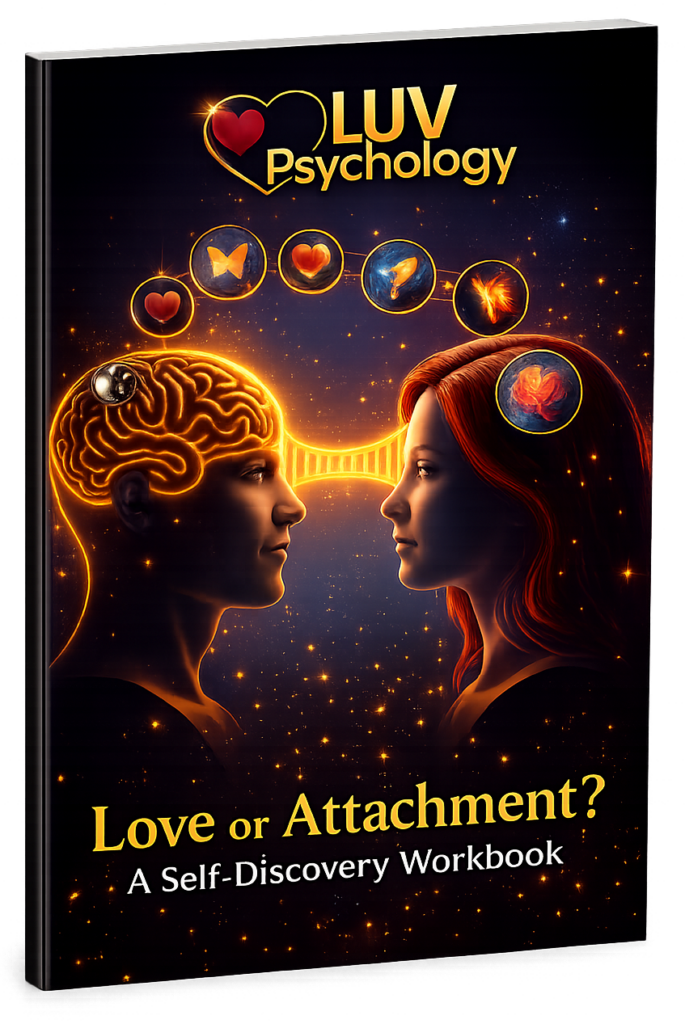
Love vs Attachment: The Key Differences
Attachment
Feels urgent
Anxiety-driven
Fear of loss
Obsession
Love
Feels steady
Safety-driven
Trust
Presence
Obsession Presence
Emotional dependency Emotional security
If the thought of losing someone causes panic, that’s attachment.
If the thought of being yourself brings peace, that’s love.
7 Psychological Signs You’re Attached, Not In Love
Your mood depends on how they treat you
You feel anxious when they pull away
You ignore red flags to keep the connection
Peace feels boring — chaos feels exciting
You crave reassurance more than intimacy
You stay even when it hurts
You fear losing them more than losing yourself
These are not flaws.
They are patterns — and patterns can be changed.
Why Attachment Feels So Strong (The Nervous System Explanation)
Your nervous system is designed to seek what feels familiar, not what is healthy.
If unpredictability, emotional distance, or inconsistency were present early in life, your brain may associate those patterns with connection.
That’s why attachment feels:
Addictive
Intense
Hard to let go
Your body mistakes activation for love.
Why Love Feels “Boring” After Attachment
Many people say:
“They’re good to me… but I don’t feel the spark.”
Psychology explains this clearly:
If your nervous system is used to chaos, calm will feel unfamiliar.
This doesn’t mean love is missing.
It means your body is learning safety.
How to Shift From Attachment to Love
You don’t heal attachment by chasing love.
You heal attachment by regulating your nervous system.
Start by:
Noticing emotional triggers
Pausing before reacting
Separating anxiety from intuition
Choosing consistency over intensity
Love begins where emotional urgency ends.
Why This Matters for Healthy Relationships
Understanding love vs attachment helps you:
Stop repeating painful relationship cycles
Choose emotionally available partners
Feel safe without losing passion
Build secure, lasting connections
This is the foundation of emotional maturity.
The LUV Psychology Perspective
At LUV Psychology, we don’t teach you how to attract attention.
We teach you how to:
Understand your emotional patterns
Recognize attachment vs love
Regulate your nervous system
Choose relationships that feel safe, not addictive
Because real love doesn’t feel like anxiety.
It feels like home.
Final Thought
If someone gives you butterflies but no peace — that’s attachment.
If someone gives you peace without fear — that’s love.
Knowing the difference changes everything.